
ASTM C1774-24 低温隔热系统热性能测试的标准指南

VIP专免

Designation: C1774 −24
Standard Guide for
Thermal Performance Testing of Cryogenic Insulation
Systems
1
This standard is issued under the fixed designation C1774; the number immediately following the designation indicates the year of
original adoption or, in the case of revision, the year of last revision. A number in parentheses indicates the year of last reapproval. A
superscript epsilon (´) indicates an editorial change since the last revision or reapproval.
1. Scope
1.1 This guide provides information for the laboratory
measurement of the steady-state thermal transmission proper-
ties and heat flux of thermal insulation systems under cryo-
genic conditions. Thermal insulation systems may be com-
posed of one or more materials that may be homogeneous or
non-homogeneous; flat, cylindrical, or spherical; at boundary
conditions from near absolute zero or 4 K up to 400 K; and in
environments from high vacuum to an ambient pressure of air
or residual gas. The testing approaches presented as part of this
guide are distinct from, and yet complementary to, other
ASTM thermal test methods including C177,C518, and C335.
Akey aspect of this guide is the notion of an insulation system,
not an insulation material. Under the practical use environment
of most cryogenic applications even a single-material system
can still be a complex insulation system (1-3).
2
To determine
the inherent thermal properties of insulation materials, the
standard test methods as cited in this guide should be con-
sulted.
1.2 The function of most cryogenic thermal insulation
systems used in these applications is to maintain large tem-
perature differences thereby providing high levels of thermal
insulating performance. The combination of warm and cold
boundary temperatures can be any two temperatures in the
range of near 0 K to 400 K. Cold boundary temperatures
typically range from 4 K to 100 K, but can be much higher
such as 300 K. Warm boundary temperatures typically range
from 250 K to 400 K, but can be much lower such as 40 K.
Large temperature differences up to 300 K are typical. Testing
for thermal performance at large temperature differences with
one boundary at cryogenic temperature is typical and repre-
sentative of most applications. Thermal performance as a
function of temperature can also be evaluated or calculated in
accordance with Practices C1058 or C1045 when sufficient
information on the temperature profile and physical modeling
are available.
1.3 The range of residual gas pressures for this Guide is
from 10
-7
torr to 10
+3
torr (1.33
-5
Pa to 133 kPa) with different
purge gases as required. Corresponding to the applications in
cryogenic systems, three sub-ranges of vacuum are also de-
fined: High Vacuum (HV) from <10
-6
torr to 10
-3
torr (1.333
-4
Pa to 0.133 Pa) [free molecular regime], Soft Vacuum (SV)
from 10
-2
torr to 10 torr (from 1.33 Pa to 1,333 Pa) [transition
regime], No Vacuum (NV) from 100 torr to 1000 torr (13.3 kPa
to 133 kPa) [continuum regime].
1.4 Thermal performance can vary by four orders of mag-
nitude over the entire vacuum pressure range. Effective thermal
conductivities can range from 0.010 mW/m-K to 100 mW/
m-K. The primary governing factor in thermal performance is
the pressure of the test environment. High vacuum insulation
systems are often in the range from 0.05 mW/m-K to 2
mW/m-K while non-vacuum systems are typically in the range
from 10 mW/m-K to 30 mW/m-K. Soft vacuum systems are
generally between these two extremes (4).Of particular de-
mand is the very low thermal conductivity (very high thermal
resistance) range in sub-ambient temperature environments.
For example, careful delineation of test results in the range of
0.01 mW/m-K to 1 mW/m-K (from R-value 14,400 to R-value
144) is required as a matter of normal engineering applications
for many cryogenic insulation systems (5-7).The application
of effective thermal conductivity values to multilayer insula-
tion (MLI) systems and other combinations of diverse
materials, because they are highly anisotropic and specialized,
must be done with due caution and full provision of supporting
technical information (8).The use of heat flux (W/m
2
) is, in
general, more suitable for reporting the thermal performance of
MLI systems (9-11).
1.5 This guide covers different approaches for thermal
performance measurement in sub-ambient temperature envi-
ronments. The test apparatuses (apparatus) are divided into two
categories: boiloff calorimetry and electrical power. Both
absolute and comparative apparatuses are included.
1.6 This guide sets forth the general design requirements
necessary to construct and operate a satisfactory test apparatus.
1
This guide is under the jurisdiction of ASTM Committee C16 on Thermal
Insulation and is the direct responsibility of Subcommittee C16.30 on Thermal
Measurement.
Current edition approved March 15, 2024. Published April 2024. Originally
approved in 2013. Last previous edition approved in 2019 as C1774 – 13 (2019).
DOI: 10.1520/C1774-24.
2
The boldface numbers in parentheses refer to the list of references at the end of
this standard.
Copyright © ASTM International, 100 Barr Harbor Drive, PO Box C700, West Conshohocken, PA 19428-2959. United States
This international standard was developed in accordance with internationally recognized principles on standardization established in the Decision on Principles for the
Development of International Standards, Guides and Recommendations issued by the World Trade Organization Technical Barriers to Trade (TBT) Committee.

A wide variety of apparatus constructions, test conditions, and
operating conditions are covered. Detailed designs are not
given but must be developed within the constraints of the
general requirements. Examples of different cryogenic test
apparatuses are found in the literature (12).These apparatuses
include boiloff types (13-17)as well as electrical types (18-21).
1.7 These testing approaches are applicable to the measure-
ment of a wide variety of specimens, ranging from opaque
solids to porous or transparent materials, and a wide range of
environmental conditions including measurements conducted
at extremes of temperature and with various gases and over a
range of pressures. Of particular importance is the ability to
test highly anisotropic materials and systems such as multilayer
insulation (MLI) systems (22-25).Other test methods are
limited in this regard and do not cover the testing of MLI and
other layered systems under the extreme cryogenic and vacuum
conditions that are typical for these systems.
1.8 In order to ensure the level of precision and accuracy
expected, users applying this standard must possess a working
knowledge of the requirements of thermal measurements and
testing practice and of the practical application of heat transfer
theory relating to thermal insulation materials and systems.
Detailed operating procedures, including design schematics
and electrical drawings, should be available for each apparatus
to ensure that tests are in accordance with this Guide. In
addition, automated data collecting and handling systems
connected to the apparatus must be verified as to their
accuracy. Verification can be done by calibration and compar-
ing data sets, which have known results associated with them,
using computer models.
1.9 It is impractical to establish all details of design and
construction of thermal insulation test equipment and to
provide procedures covering all contingencies associated with
the measurement of heat flow, extremely delicate thermal
balances, high vacuum, temperature measurements, and gen-
eral testing practices. The user may also find it necessary, when
repairing or modifying the apparatus, to become a designer or
builder, or both, on whom the demands for fundamental
understanding and careful experimental technique are even
greater. The test methodologies given here are for practical use
and adaptation as well as to enable future development of
improved equipment or procedures.
1.10 This guide does not specify all details necessary for the
operation of the apparatus. Decisions on sampling, specimen
selection, preconditioning, specimen mounting and
positioning, the choice of test conditions, and the evaluation of
test data shall follow applicable ASTM Test Methods, Guides,
Practices or Product Specifications or governmental regula-
tions. If no applicable standard exists, sound engineering
judgment that reflects accepted heat transfer principles must be
used and documented.
1.11 This guide allows a wide range of apparatus design and
design accuracy to be used in order to satisfy the requirements
of specific measurement problems. Compliance with a further
specified test method should include a report with a discussion
of the significant error factors involved as well the uncertainty
of each reported variable.
1.12 The values stated in SI units are to be regarded as the
standard. The values given in parentheses are for information
only. Either SI or Imperial units may be used in the report,
unless otherwise specified.
1.13 Safety precautions including normal handling and
usage practices for the cryogen of use. Prior to operation of the
apparatus with any potentially hazardous cryogen or fluid, a
complete review of the design, construction, and installation of
all systems shall be conducted. Safety practices and procedures
regarding handling of hazardous fluids have been extensively
developed and proven through many years of use. For systems
containing hydrogen, particular attention shall be given to
ensure the following precautions are addressed: (1) adequate
ventilation in the test area, (2) prevention of leaks, (3)
elimination of ignition sources, (4) fail safe design, and (5)
redundancy provisions for fluid fill and vent lines. This
standard does not purport to address all of the safety concerns,
if any, associated with its use. It is the responsibility of the user
of this standard to establish appropriate safety, health, and
environmental practices and determine the applicability of
regulatory limitations prior to use.
1.14 Major sections within this standard are arranged as
follows:
Section
Scope 1
Referenced Documents 2
Terminology 3
Summary of Test Methods 4
Significance and Use 5
Apparatus 6
Test Specimens and Preparation 7
Procedure 8
Calculation of Results 9
Report 10
Keywords 11
Annexes
Cylindrical Boiloff Calorimeter (Absolute) Annex A1
Cylindrical Boiloff Calorimeter (Comparative) Annex A2
Flat Plate Boiloff Calorimeter (Absolute) Annex A3
Flat Plate Boiloff Calorimeter (Comparative) Annex A4
Electrical Power Cryostat Apparatus (Cryogen) Annex A5
Electrical Power Cryostat Apparatus (Cryocooler) Annex A6
Appendix
Rationale Appendix X1
References
1.15 This international standard was developed in accor-
dance with internationally recognized principles on standard-
ization established in the Decision on Principles for the
Development of International Standards, Guides and Recom-
mendations issued by the World Trade Organization Technical
Barriers to Trade (TBT) Committee.
2. Referenced Documents
2.1 ASTM Standards:
3
C167 Test Methods for Thickness and Density of Blanket or
Batt Thermal Insulations
C168 Terminology Relating to Thermal Insulation
C177 Test Method for Steady-State Heat Flux Measure-
ments and Thermal Transmission Properties by Means of
3
For referenced ASTM standards, visit the ASTM website, www.astm.org, or
contact ASTM Customer Service at service@astm.org. For Annual Book of ASTM
Standards volume information, refer to the standard’s Document Summary page on
the ASTM website.
C1774 − 24
2

the Guarded-Hot-Plate Apparatus
C335 Test Method for Steady-State Heat Transfer Properties
of Pipe Insulation
C518 Test Method for Steady-State Thermal Transmission
Properties by Means of the Heat Flow Meter Apparatus
C520 Test Methods for Density of Granular Loose Fill
Insulations
C534 Specification for Preformed Flexible Elastomeric Cel-
lular Thermal Insulation in Sheet and Tubular Form
C549 Specification for Perlite Loose Fill Insulation
C552 Specification for Cellular Glass Thermal Insulation
C578 Specification for Rigid, Cellular Polystyrene Thermal
Insulation
C591 Specification for Unfaced Preformed Rigid Cellular
Polyisocyanurate Thermal Insulation
C680 Practice for Estimate of the Heat Gain or Loss and the
Surface Temperatures of Insulated Flat, Cylindrical, and
Spherical Systems by Use of Computer Programs
C740 Guide for Evacuated Reflective Insulation In Cryo-
genic Service
C870 Practice for Conditioning of Thermal Insulating Ma-
terials
C1029 Specification for Spray-Applied Rigid Cellular Poly-
urethane Thermal Insulation
C1045 Practice for Calculating Thermal Transmission Prop-
erties Under Steady-State Conditions
C1058 Practice for Selecting Temperatures for Evaluating
and Reporting Thermal Properties of Thermal Insulation
C1482 Specification for Polyimide Flexible Cellular Ther-
mal and Sound Absorbing Insulation
C1484 Specification for Vacuum Insulation Panels
C1594 Specification for Polyimide Rigid Cellular Thermal
Insulation
C1667 Test Method for Using Heat Flow Meter Apparatus to
Measure the Center-of-Panel Thermal Transmission Prop-
erties of Vacuum Insulation Panels
C1728 Specification for Flexible Aerogel Insulation
E230 Specification for Temperature-Electromotive Force
(emf) Tables for Standardized Thermocouples
E408 Test Methods for Total Normal Emittance of Surfaces
Using Inspection-Meter Techniques
E691 Practice for Conducting an Interlaboratory Study to
Determine the Precision of a Test Method
2.2 ISO Standard:
4
ISO 21014 Cryogenic Vessels: Cryogenic Insulation Perfor-
mance
3. Terminology
3.1 Definitions—Terminology of standards C168,C680, and
C1045 applies to the terms used in this standard unless
otherwise noted. Properties based on specimens tested under
the conditions specified may not be representative of the
installed performance if the end use conditions differ substan-
tially from the test conditions. The temperature dependences of
the thermal performance of a given insulation test specimen,
particularly those at large temperature differentials that are
common to most cryogenic insulation systems, are generally
expected to be significant and non-linear in nature. For details
on testing or analysis in the thermal characterization of a
specific material, Practice C1045, Section 6, Determination of
the Thermal Conductivity Relationship for a Temperature
Range, should be consulted.
3.2 Definitions:
3.2.1 cryogenic insulation systems—encompass a wide
range of material combinations and thermal performance
levels. Examples of the effective thermal conductivity of
different systems and the widely varying thermal performance
ranges are shown in Fig. 1.
3.2.2 insulation test specimen—an insulation test specimen
is composed of one or more materials, homogeneous or
non-homogeneous, for which thermal transmission properties
through the thickness of the system are to be measured under
sub-ambient conditions.
3.2.2.1 Discussion—An insulation test specimen may con-
sist of a single material, one type of material in several discrete
elements, or a number of different materials working in a
specialized design configuration. In reality, a test specimen is
always a system, either a single material (with or without
inclusion of a gas) or a combination of materials in different
forms. Forms of insulation test specimens may be bulk-fill,
powder, blanket, layered, clam-shell, panels, monoliths, or
other type configurations. Examples of materials include foams
(closed cell or open cell), fibrous insulation products, aerogels
(blankets or bulk-fill or packaged), multilayer insulation
systems, clam shells of foams of cellular glass, composite
panels, polymeric composites, or any number of bulk-fill
materials such as perlite powder and glass bubbles.
3.2.3 multilayer insulation (MLI)—insulation systems com-
posed of multiple radiation shields physically separated to
reduce conductive heat transfer. The radiation shields are thin
plastic membranes (usually polyester or polyimide films)
coated on one or both sides with a low-emittance, vapor-
deposited metal (usually aluminum, gold, or silver), or thin
metal foil membranes. Separation of the shields can be
accomplished by (1) alternating thin layers of low-density,
low-conductivity materials such as woven fabric net, fibrous
paper, powder insulation, or sliced foam spacers within the
radiation shields; (2) bonding low-density, low conductivity
filaments to one side of the radiation shields; (3) mechanically
crinkling, dimpling, or embossing the radiation shields them-
selves; (4) attaching mechanical spacers; or (5) levitating the
radiation shields with static or magnetic forces. For some
techniques, the radiation shields are commonly metalized on
one side only to achieve minimum conductive heat transfer.
Guide C740 provides further information on MLI materials,
designs, and performance characteristics. Test Methods E408
gives information on emissivity testing of the reflective mate-
rials used in constructing MLI systems.
3.3 Definitions of Terms Specific to This Standard:
3.3.1 cold boundary temperature (CBT)—the cold boundary
temperature is defined as the cold temperature imposed on
cold-side surface of the insulation material by the cold mass.
4
Available from American National Standards Institute (ANSI), 25 W. 43rd St.,
4th Floor, New York, NY 10036, http://www.ansi.org.
C1774 − 24
3

摘要:
展开>>
收起<<
ASTM C1774-2024 Standard Guide for Thermal Performance Testing of Cryogenic Insulation Systems 低温隔热系统热性能测试的标准指南
声明:本文档系会员上传,若文档所含内容侵犯了您的版权或隐私,请立即通知,我们立即给予侵权申诉删除!
相关推荐
-
IPC 9592B-2012 计算机和电信行业电源转换设备的要求VIP专免

 2024-09-01 420
 -
IPC A-600K-2020 印制板的可接受性VIP专享
 2024-09-01 273
 -
IPC HDBK-001H-2021(电子装配核心标准J-STD-001)的补充手册和指南VIP专享
 2024-09-01 324
 -
IPC HDBK-830A-2013 conformal涂层的设计、选择与应用指南VIP专免
 2024-09-01 545
 -
IPC A-610H-2020 Acceptability of Electronic Assemblies 电子组件的可接受性标准VIP专享
 2024-09-01 367
 -
IPC AJ-820A-2012 装配与连接手册VIP专免
 2024-09-01 268
 -
IPC WHMA A-620E-2022 电缆与线束组件的要求与验收规范VIP专享
 2024-09-01 148
 -
IPC TM-650-2000 (2007) 试验方法手册 高清英文版VIP专免
 2025-01-04 704
 -
IPC-1751A-2010 声明流程管理的通用要求VIP免费
 2025-02-07 267
 -
IPC Standards Handbook 2025 多个标准精华浓缩(非IPC官方出版)VIP专享
 2025-12-15 166
作者:Carl
分类:国外协会
价格:12星币
属性:25 页
大小:2.14MB
格式:PDF
时间:2024-09-03
相关内容
-
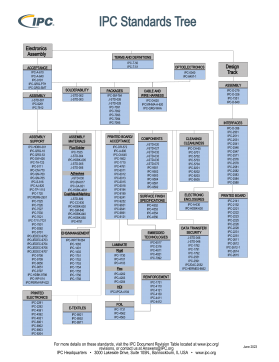
IPC标准体系树结构图 IPC Standards Tree 2023
分类:国外协会
时间:2026-04-01
标签:结构
格式:PDF
价格:免费
-

Sierra Circuits公司 PCB堆叠设计指南 PCB Stack-Up Design Guide June 2024
分类:国外协会
时间:2026-07-21
标签:PCB
格式:PDF
价格:20 星币
-
IPC-HERMES-9852-2024 Version 1.6 SMT组装中机器对机器通信的全球标准 The Global Standard for Machine-to-Machine Communication in SMT Assembly
分类:国外协会
时间:2026-08-11
标签:机器
格式:PDF
价格:30 星币
-
IPC 印制电路板组件检查表 2024版 IPC CHECKLIST for Printed Board Assemblies
分类:国外协会
时间:2026-08-11
标签:印制电路板
格式:PDF
价格:20 星币
-
IPC 印制板组件标准指南 2026年 IPC Standards Guidance for Printed Board Assemblies
分类:国外协会
时间:2026-08-11
标签:标准指南
格式:PDF
价格:20 星币


