
ASTM D6160 - 21 (2025) 用气相色谱法测定废料中多氯联苯(PCBs)的标准试验方法

VIP免费

Designation: D6160 −21 (Reapproved 2025)
Standard Test Method for
Determination of Polychlorinated Biphenyls (PCBs) in Waste
Materials by Gas Chromatography
1
This standard is issued under the fixed designation D6160; the number immediately following the designation indicates the year of
original adoption or, in the case of revision, the year of last revision. A number in parentheses indicates the year of last reapproval. A
superscript epsilon (´) indicates an editorial change since the last revision or reapproval.
1. Scope
1.1 This test method
2
covers a two-tiered analytical ap-
proach to PCB screening and quantitation of liquid and solid
wastes, such as oils, sludges, aqueous solutions, and other
waste matrices.
1.2 Tier I is designed to screen samples rapidly for the
presence of PCBs.
1.3 Tier II is used to determine the concentration of PCBs,
typically in the range of from 2 mg ⁄kg to 50 mg ⁄kg. PCB
concentrations greater than 50 mg/kg are determined through
analysis of sample dilutions.
1.4 This is a pattern recognition approach, which does not
take into account individual congeners that might occur, such
as in reaction by-products. This test method describes the use
of Aroclors
3
1016, 1221, 1232, 1242, 1248, 1254, 1260, 1262,
and 1268, as reference standards, but others could also be
included. Aroclors 1016 and 1242 have similar capillary gas
chromatography (GC) patterns. Interferences or weathering are
especially problematic with Aroclors 1016, 1232, and 1242 and
may make distinction between the three difficult.
1.5 This test method provides sample clean up and instru-
mental conditions necessary for the determination of Aroclors.
Gas chromatography (GC) using capillary column separation
technique and electron capture detector (ECD) are described.
Other detectors, such as atomic emission detector (AED) and
mass spectrometry (MS), may be used if sufficient performance
(for example, sensitivity) is demonstrated. Further details about
the use of GC and ECD are provided in Practices E355,E697,
and E1510.
1.6 Quantitative results are reported on the dry weights of
waste samples.
1.7 Quantification limits will vary depending on the type of
waste stream being analyzed.
1.8 The values stated in SI units are to be regarded as
standard. No other units of measurement are included in this
standard.
1.9 This standard does not purport to address all of the
safety concerns, if any, associated with its use. It is the
responsibility of the user of this standard to establish appro-
priate safety, health, and environmental practices and deter-
mine the applicability of regulatory limitations prior to use.
1.10 This international standard was developed in accor-
dance with internationally recognized principles on standard-
ization established in the Decision on Principles for the
Development of International Standards, Guides and Recom-
mendations issued by the World Trade Organization Technical
Barriers to Trade (TBT) Committee.
2. Referenced Documents
2.1 ASTM Standards:
4
D4059 Test Method for Analysis of Polychlorinated Biphe-
nyls in Insulating Liquids by Gas Chromatography
D4175 Terminology Relating to Petroleum Products, Liquid
Fuels, and Lubricants
E203 Test Method for Water Using Volumetric Karl Fischer
Titration
E288 Specification for Laboratory Glass Volumetric Flasks
E355 Practice for Gas Chromatography Terms and Relation-
ships
E697 Practice for Use of Electron-Capture Detectors in Gas
Chromatography
E969 Specification for Glass Volumetric (Transfer) Pipets
E1510 Practice for Installing Fused Silica Open Tubular
Capillary Columns in Gas Chromatographs
1
This test method is under the jurisdiction of ASTM Committee D02 on
Petroleum Products, Liquid Fuels, and Lubricants and is the direct responsibility of
Subcommittee D02.04.0L on Gas Chromatography Methods.
Current edition approved Oct. 1, 2025. Published October 2025. Originally
approved in 1997. Last previous edition approved in 2021 as D6160 – 21. DOI:
10.1520/D6160-21R25.
2
This test method is based largely on EPA 8080 (and the proposed modification
for the use of capillary columns, EPA 8081) and EPA Report 600/4–81–045 by
Bellar, T. and J. Lichtenberg, reported in 1981. The report is titled, “The
Determination of Polychlorinated Biphenyls in Transformer Fluid and Waste Oils,”
and provides significant support to the protocol in this standard.
3
Aroclor Standards may be purchased as 1000 µg/mL in isooctane. Aroclor is a
registered trademark of the Monsanto Company, 800 N. Lindbergh Blvd., St. Louis,
MO 63167.
4
For referenced ASTM standards, visit the ASTM website, www.astm.org, or
contact ASTM Customer Service at www.astm.org/contact. For Annual Book of
ASTM Standards volume information, refer to the standard’s Document Summary
page on the ASTM website.
Copyright © ASTM International, 100 Barr Harbor Drive, PO Box C700, West Conshohocken, PA 19428-2959. United States
This international standard was developed in accordance with internationally recognized principles on standardization established in the Decision on Principles for the
Development of International Standards, Guides and Recommendations issued by the World Trade Organization Technical Barriers to Trade (TBT) Committee.
1

2.2 U.S. EPA Standards:
Method 608 Organochlorine Pesticides and PCBs
5
Method 680 Determination of Pesticides and PCBs in Water
and Soil/Sediment by Gas Chromatography/Mass Spec-
trometry
6
Method 3620 Florisil Column Clean-Up
7
Method 3630 Silica Gel Clean-Up
7
Method 3660 Sulfur Clean-Up
7
Method 8082 Determination of PCB in Water and Soil/
Sediment by Gas Chromatography: Capillary Column
Technique
7
3. Terminology
3.1 Definitions:
3.1.1 This test method makes reference to common gas
chromatographic procedures, terms, and relationships. Detailed
definitions of these can be found in Practice E355 and
Terminology D4175. In addition, definition of terms specific to
this standard include:
3.1.2 Aroclors, n—commercial mixtures of polychlorinated
biphenyl congeners marketed and trademarked by Monsanto
prior to 1977.
3.1.2.1 Discussion—Specific Aroclors are usually desig-
nated by a four-digit number, with the first two digits usually
designating the number of carbon atoms and the last two digits
providing the chlorine content (for example, Aroclor 1260 is
60 % (weight) chlorine).
3.1.3 congeners, n—compounds related by structural simi-
larities.
3.1.3.1 Discussion—All polychlorinated biphenyls (PCBs)
share the same C
12
structure and vary only by the number and
position of the chlorine atoms attached to the aromatic rings.
3.1.4 continuing calibration standard (CCS)—a known
blend or one or more Aroclors at a fixed concentration that is
injected into the gas chromatograph to demonstrate the validity
of the calibration.
3.1.5 dry weight, n—concentration of PCBs after factoring
out the water content.
3.1.5.1 Discussion—This correction assumes that all PCBs
originated from nonaqueous sources and any water present has
been added subsequently, diluting the original concentration.
This correction can be described using the formula:
Aroclor
~
mg/Kg
! ~
dry
!
5Aroclor
~
mg/Kg
! ~
wet
!
~
100 2% water
!
/100 (1)
3.1.6 instrument performance standard (IPS), n—a known
low level of an Aroclor in a clean solvent used as a comparator
to determine which qualitative (screening) results are of
sufficient magnitude to require quantitative analyses.
3.1.7 surrogate, n—compound or compounds that are simi-
lar to analytes of interest in chemical composition, extraction,
and chromatography, but that are not normally found at
significant levels in the matrices of interest.
3.1.7.1 Discussion—Surrogates may be spiked into blanks,
standards, samples, or matrix spikes prior to analysis to allow
a determination of a quantitative recovery rate. Surrogates are
also used to document matrix effects and method control.
3.1.8 waste material, n—any matter, within the scope of this
test method, that is in the process of being recycled or
disposed.
4. Summary of Test Method
4.1 The sample is extracted with solvent and the extract is
treated to remove interfering substances, if needed. The sample
extract is injected into a gas chromatograph. The components
are separated as they pass through the capillary column and
polychlorinated biphenyl compounds, if present, are detected
by an ECD.
NOTE 1—Portions of this test method are similar to EPA Methods 608,
680, and 8082.
4.2 For screening (Tier I), instrument performance is moni-
tored by a 2 µL injection of a standard containing Aroclors
1016 and 1260. For low level work (1 ppm) the instrument is
checked with a standard concentration of 0.01 µg ⁄mL (each)
and for higher level work (10 ppm), the instrument is checked
with a 0.1 µg ⁄mL standard.
4.3 Identification involves a pattern comparison of the
chromatograms of an unknown sample with that of a standard
obtained under identical instrumental conditions.
4.4 When quantification is required (Tier II), an external
standards method (ESTD) is used. The quantitation technique
typically requires a comparison of five peaks (minimum of
three) between the chromatograms of an unknown sample and
that of standard Aroclor obtained under identical conditions.
Quantitation of either Aroclors 1016 or 1260 is performed
using a five-point calibration of a mixed Aroclor standard
containing Aroclors 1016 and 1260. All remaining Aroclors are
quantitated from single point calibrations. Calibration is veri-
fied daily by comparison of results obtained for analysis of the
midpoint calibration standard of Aroclor 1016 and 1260 to the
five-point calibration curve. (See Appendix X1 for an example
chromatogram and calibration table.)
5. Significance and Use
5.1 This test method provides sufficient PCB data for many
regulatory requirements. While the most common regulatory
level is 50 ppm (dry weight corrected), lower limits are used in
some locations. Since sensitivities will vary for different types
of samples, one shall demonstrate a sufficient method detection
limit for the matrix of interest.
5.2 This test method differs from Test Method D4059 in that
it provides for more sample clean-up options, utilizes a
capillary column for better pattern recognition and interference
discrimination, and includes both a qualitative screening and a
quantitative results option.
6. Interferences
6.1 The ECD has selective sensitivity to alkyl halides,
conjugated carbonyls, nitrogen compounds, organometallics,
5
EPA Report 600/4/82–057, Environmental Monitoring and Support Laboratory,
Cincinnati, OH.
6
Alford-Stevens, Ann, et al, Physical and Chemical Methods Branch, Environ-
mental Monitoring and Support Laboratory Office of Research and Development,
USEPA, Cincinnati, OH.
7
U.S. EPA, “Test Methods for Evaluating Solid Waste,” Physical/Chemical
Methods, SW-846.
D6160 − 21 (2025)
2

and sulfur. Therefore, the chromatogram obtained for each
sample shall be carefully compared to chromatograms of
standards to allow proper interpretation.
6.2 Solvents, reagents, glassware, and other sample process-
ing hardware may yield artifacts or interferences, or both, to
standard analysis. All these materials shall be demonstrated to
be free from interferences under the conditions of analysis by
analyzing method blanks.
6.3 Interferences from phthalate esters may pose a major
problem in Aroclor determinations when using ECD. Phtha-
lates generally appear in the chromatogram as broad late
eluting peaks. Since phthalates are commonly used as plasti-
cizers and are easily extracted from plastic, all contact of
samples and extracts with plastic should be avoided.
6.4 While general clean-up techniques are provided as part
of this test method, some samples may require additional
clean-up beyond the scope of this test method before proper
instrumental analysis may be performed.
7. Apparatus
7.1 Gas Chromatograph, a temperature programmable gas
chromatograph suitable for splitless injections; equipped with
an ECD.
7.2 Data System, a data system capable of measuring peak
areas.
7.3 Regulator (Make-up Gas)—N
2
or Ar:Methane (95:5);
two stage regulator rated at 20 MPa (3000 psi) inlet and 35 kPa
to 860 kPa (5 psi to 125 psi) outlet.
7.4 Regulator (Carrier Gas)—H
2
, two-stage regulator rated
at 20 MPa (3000 psi) inlet and 35 kPa to 860 kPa (5 psi to
125 psi) outlet.
7.5 Gas Purifiers, to remove moisture and particulates.
Depending on the levels and types of interferences
encountered, these might involve molecular sieves (moisture),
activated carbon (organics), or other commercially-available
media.
7.6 Flow Meter, to measure gas flow. Typical range is from
0.5 mL ⁄min. to 50 mL ⁄min. 60.1 mL ⁄min.
7.7 Column, crosslinked 5 % phenyl methyl silicone, 30 m
by 0.32 mm id by 0.25 µm film thickness.
7.7.1 It is possible that other columns will provide sufficient
separating power, but this shall be demonstrated before use.
7.8 Analytical Balance, capable of weighing to 0.0001 g.
7.9 Volumetric Flasks, 10 mL, 50 mL, 100 mL, 200 mL,
(see Specification E288) Class A with ground-glass stoppers.
7.10 Vortex Mixer:
7.11 Vials, glass, 20 mL and 40 mL capacity with TFE-
fluorocarbon-lined caps.
7.12 Septum Inserts—Inserts shall be treated with a silyni-
zation reagent before use or after cleaning. (See Annex A2 for
possible procedure.) They may be purchased already treated.
7.13 Volumetric Pipette, 1 mL, 5 mL, 10 mL (see Specifi-
cation E969), Class A.
7.14 Syringe, 500 µL, mechanical guide.
8. Reagents and Materials
8.1 Purity of Reagents—Reagent grade chemicals shall be
used in all tests. Unless otherwise indicated, it is intended that
all reagents conform to the specifications of the Committee on
Analytical Reagents of the American Chemical Society where
such specifications are available.
8
Other grades may be used,
provided it is first ascertained that the reagent is of sufficiently
high purity to permit its use without lessening the accuracy of
the determination.
8.2 Acetone—(Warning—Extremely flammable. Vapors
may cause flash fire.)
8.3 Activated Magnesium Silicate (Florisil), Pesticide resi-
due (PR) grade (60/100 mesh); store in glass containers with
ground glass stoppers or foil lined screw caps.
8.3.1 Just before use, activate each batch at least 4 h at
130 °C in a glass container loosely covered with aluminum
foil. Alternatively, store the magnesium silicate in an oven at
130 °C. Cool the magnesium silicate in a desiccator for 30 min
before use.
8.4 Hexane—(Warning—Extremely flammable. Harmful if
inhaled. May produce nerve cell damage. Vapors may cause
flash fire.)
8.5 Isooctane—(Warning—Extremely flammable. Harmful
if inhaled. Vapors may cause flash fire.)
8.6 Methanol—(Warning—Flammable. Vapor harmful.
May be fatal or cause blindness if swallowed or inhaled.
Cannot be made nonpoisonous.)
8.7 Silynization Reagent (for example, 5 % dimethyldichlo-
rosilane in toluene). See Annex A2 for instructions.
8.8 Sodium Sulfate, granular, anhydrous (maintained at
130 °C for at least 24 h prior to use). Cool the sodium sulfate
in a desiccator for 30 min before use.
8.9 Sulfuric Acid (concentrated):
8.10 Acetone/Hexane, 10 % acetone/90 % hexane (v/v).
8.11 Gases, Hydrogen (zero grade; 99.995 % purity) and
nitrogen (zero grade; 99.998 % purity) or argon/methane (95:5;
ECD grade).
8.11.1 Care shall be given to ensure purity of the carrier gas.
For example, an in-line filter may be required.
8.12 Aroclor Standards
3
, Aroclor 1016, 1221, 1232, 1242,
1254, 1260, 1262, 1268.
8.13 Decachlorobiphenyl (DCB) (surrogate) Optional:
8.13.1 Surrogate Stock Standard (15 µg/mL) Preparation—
Accurately dilute 1.5 mL of 1000 µg ⁄mL DCB concentrate in
100 mL volumetric flask and fill to the mark with methanol,
yielding a 15 µg ⁄mL solution.
8
ACS Reagent Chemicals, Specifications and Procedures for Reagents and
Standard-Grade Reference Materials, American Chemical Society, Washington,
DC. For suggestions on the testing of reagents not listed by the American Chemical
Society, see Analar Standards for Laboratory Chemicals, BDH Ltd., Poole, Dorset,
U.K., and the United States Pharmacopeia and National Formulary, U.S. Pharma-
copeial Convention, Inc. (USPC), Rockville, MD.
D6160 − 21 (2025)
3

摘要:
展开>>
收起<<
本篇文章针对ASTM D6160 - 21 (2025)标准,详细阐述了如何利用气相色谱法(GC)准确测定废料中多氯联苯(PCBs)的含量。该标准为废料处理、环境监测及合规检验提供了权威的试验流程与质量控制要求。文章深入解析了方法原理、样品前处理步骤、色谱条件设置及数据判定准则,帮助实验室技术人员与环保从业者快速掌握PCBs定量分析的关键技术要点,从而提升检测结果的可靠性与法规符合性。
声明:本文档系会员上传,若文档所含内容侵犯了您的版权或隐私,请立即通知,我们立即给予侵权申诉删除!
相关推荐
-
IPC 9592B-2012 计算机和电信行业电源转换设备的要求VIP专免

 2024-09-01 420
 -
IPC A-600K-2020 印制板的可接受性VIP专享
 2024-09-01 272
 -
IPC HDBK-001H-2021(电子装配核心标准J-STD-001)的补充手册和指南VIP专享
 2024-09-01 324
 -
IPC HDBK-830A-2013 conformal涂层的设计、选择与应用指南VIP专免
 2024-09-01 545
 -
IPC A-610H-2020 Acceptability of Electronic Assemblies 电子组件的可接受性标准VIP专享
 2024-09-01 367
 -
IPC AJ-820A-2012 装配与连接手册VIP专免
 2024-09-01 268
 -
IPC WHMA A-620E-2022 电缆与线束组件的要求与验收规范VIP专享
 2024-09-01 148
 -
IPC TM-650-2000 (2007) 试验方法手册 高清英文版VIP专免
 2025-01-04 704
 -
IPC-1751A-2010 声明流程管理的通用要求VIP免费
 2025-02-07 267
 -
IPC Standards Handbook 2025 多个标准精华浓缩(非IPC官方出版)VIP专享
 2025-12-15 166
作者:标准小能手
分类:国外协会
价格:18星币
属性:15 页
大小:493.26KB
格式:PDF
时间:2025-12-09
相关内容
-
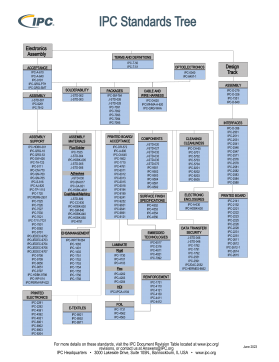
IPC标准体系树结构图 IPC Standards Tree 2023
分类:国外协会
时间:2026-04-01
标签:结构
格式:PDF
价格:免费
-

Sierra Circuits公司 PCB堆叠设计指南 PCB Stack-Up Design Guide June 2024
分类:国外协会
时间:2026-07-21
标签:PCB
格式:PDF
价格:20 星币
-
IPC-HERMES-9852-2024 Version 1.6 SMT组装中机器对机器通信的全球标准 The Global Standard for Machine-to-Machine Communication in SMT Assembly
分类:国外协会
时间:2026-08-11
标签:机器
格式:PDF
价格:30 星币
-
IPC 印制电路板组件检查表 2024版 IPC CHECKLIST for Printed Board Assemblies
分类:国外协会
时间:2026-08-11
标签:印制电路板
格式:PDF
价格:20 星币
-
IPC 印制板组件标准指南 2026年 IPC Standards Guidance for Printed Board Assemblies
分类:国外协会
时间:2026-08-11
标签:标准指南
格式:PDF
价格:20 星币


