
ASTM D2598 - 21

VIP免费

Designation: D2598 −21
Standard Practice for
Calculation of Certain Physical Properties of Liquefied
Petroleum (LP) Gases from Compositional Analysis
1
This standard is issued under the fixed designation D2598; the number immediately following the designation indicates the year of
original adoption or, in the case of revision, the year of last revision. A number in parentheses indicates the year of last reapproval. A
superscript epsilon (´) indicates an editorial change since the last revision or reapproval.
1. Scope*
1.1 This practice covers, by compositional analysis, the
approximate determination of the following physical charac-
teristics of commercial propane, special-duty propane, com-
mercial propane/butane mixtures, and commercial butane (cov-
ered by Specification D1835): vapor pressure, relative density,
and motor octane number (MON).
1.1.1 This practice is not applicable to any product exceed-
ing specifications for nonvolatile residues. (See Test Method
D2158.)
1.1.2 For calculating motor octane number, this practice is
applicable only to mixtures containing 20 % or less of propene.
1.1.3 For calculated motor octane number, this practice is
based on mixtures containing only components shown in Table
1.
1.2 The values stated in SI units are to be regarded as
standard.
1.2.1 Exceptions:
1.2.1.1 Non-SI units in parentheses are given for informa-
tion only.
1.2.1.2 Motor octane number and relative density are given
in MON numbers and dimensionless units, respectively.
1.3 This international standard was developed in accor-
dance with internationally recognized principles on standard-
ization established in the Decision on Principles for the
Development of International Standards, Guides and Recom-
mendations issued by the World Trade Organization Technical
Barriers to Trade (TBT) Committee.
2. Referenced Documents
2.1 ASTM Standards:
2
D1267 Test Method for Gauge Vapor Pressure of Liquefied
Petroleum (LP) Gases (LP-Gas Method)
D1657 Test Method for Density or Relative Density of Light
Hydrocarbons by Pressure Hydrometer
D1835 Specification for Liquefied Petroleum (LP) Gases
D2158 Test Method for Residues in Liquefied Petroleum
(LP) Gases
D2163 Test Method for Determination of Hydrocarbons in
Liquefied Petroleum (LP) Gases and Propane/Propene
Mixtures by Gas Chromatography
D2421 Practice for Interconversion of Analysis of C
5
and
Lighter Hydrocarbons to Gas-Volume, Liquid-Volume, or
Mass Basis
2.2 Australian Liquefied Petroleum Gas Association Publi-
cation:
3
Liquefied Petroleum Gas for Automotive Use Specification
2.3 Gas Processors Suppliers Association:
4
GPSA Engineering Data Book, 12th Edition, 2004
3. Summary of Practice
3.1 The composition of a sample of LP-gas is obtained by
using Test Method D2163 or other acceptable method. From
the analysis (expressed in liquid volume percent), the vapor
pressure, relative density, and motor octane number of the
sample may be determined.
3.2 Conversion of a compositional analysis from mole, gas
volume, or weight basis to liquid volume is obtained by using
Practice D2421 or other suitable method.
4. Significance and Use
4.1 Vapor pressure is an important specification property of
commercial propane, special duty propane, propane/butane
mixtures, and commercial butane that assures adequate
vaporization, safety, and compatibility with commercial appli-
ances. Relative density, while not a specification criterion, is
necessary for determination of filling densities and custody
1
This practice is under the jurisdiction of ASTM Committee D02 on Petroleum
Products, Liquid Fuels, and Lubricants and is the direct responsibility of Subcom-
mittee D02.H0 on Liquefied Petroleum Gas.
Current edition approved April 1, 2021. Published May 2021. Originally
approved in 1967. Last previous edition approved in 2016 as D2598 – 16. DOI:
10.1520/D2598-21.
2
For referenced ASTM standards, visit the ASTM website, www.astm.org, or
contact ASTM Customer Service at service@astm.org. For Annual Book of ASTM
Standards volume information, refer to the standard’s Document Summary page on
the ASTM website.
3
Available from Australian Liquefied Petroleum Gas Association Limited, ABN
11002703951, 30 George Street, Redfern NSW 2016, http://
www.lpgaustralia.com.au/site/
4
Available from Gas Processors Suppliers Association (GPSA), 6526 E. 60th St.,
Tulsa, OK 74145, http://www.gpsa.gpaglobal.org.
*A Summary of Changes section appears at the end of this standard
Copyright © ASTM International, 100 Barr Harbor Drive, PO Box C700, West Conshohocken, PA 19428-2959. United States
This international standard was developed in accordance with internationally recognized principles on standardization established in the Decision on Principles for the
Development of International Standards, Guides and Recommendations issued by the World Trade Organization Technical Barriers to Trade (TBT) Committee.
1

transfer. The motor octane number (MON) is useful in deter-
mining the products’ suitability as a fuel for internal combus-
tion engines.
5. Calculation
5.1 Calculated LP-Gas Vapor Pressure (see Test Method
D1267):
5.1.1 Calculate the partial gauge vapor pressure due to each
component in the mixture as follows:
Partial gauge vapor pressure 5
~
vp'3C
!
/100 (1)
where:
vp' = vapor pressure factor of specific component at 37.8 °C
(100 °F) (see Table 1), and
C= liquid volume percent of component in the mixture.
5.1.2 Add the partial gauge vapor pressures due to all
components, rounding to the nearest 7 kPa (1 psi). The total is
reported as the LP-gas vapor pressure of the sample, kPa gauge
at 37.8 °C (100 °F).
5.2 Calculated Relative Density (see Test Method D1657):
5.2.1 Calculate the relative mass of each component in the
mixture as follows:
Relative mass of component 5
~
sg'3C
!
/100 (2)
where:
sg' = relative density of the pure component at 15.6 °C
(60 °F) (see Table 1), and
C= liquid volume percent of component in the mixture.
5.2.2 Add the relative mass of all components, rounding the
total to three decimal places. The total is reported as the
relative density of the mixture.
5.3 Calculated Motor Octane Number (see ASTM Data
Series DS 4B.
5
).
5.3.1 Using only the components and values in Table 1,
calculate the partial motor octane number of each component
in the mixture to the nearest 0.1 MON as follows:
Partial motor octane number of component 5
~
m3C
!
/100 (3)
where:
m= motor octane number of component (see Table 1), and
C= liquid volume percent of component in mixture.
5.3.2 Add the partial motor octane numbers of all compo-
nents determined in 5.3.1 and round the total to the nearest
one-half number. The total is reported as the calculated motor
octane number of the mixture.
6. Keywords
6.1 butane; calculated physical properties; liquefied petro-
leum gases; motor octane number; propane; relative density;
vapor pressure
5
DS 4B, Physical Constants of Hydrocarbon and Non-Hydrocarbon
Compounds, ASTM International, W. Conshohocken, PA, 1987.
TABLE 1 Factors for Determining the Physical Characteristics of LP-Gases
A
Component
Vapor Pressure Blend
Factor, kPa-gauge
(PSIG) at 37.8 °C (100 °F)
Relative Density at
15.6 °C ⁄15.6 °C
(60 °F ⁄60 °F)
MON Blend Value
Methane 17547 (2545) 0.3 . . .
Ethane 4213 (611) 0.35628 100.7
Ethene (Ethylene) 8720 (1265) 0.37 75.6
Propane 1200 (174) 0.50719 97.1
Propene (Propylene) 1466 (213) 0.52260 84.9
Methylpropane (Isobutane) 400 (58) 0.56283 97.6
n-Butane 255 (37) 0.58420 89.6
t-2-Butene 242 (35) 0.61030 {
1-Butene 328 (48) 0.60044 80.8
2-Methylpropene (Isobutylene) 340 (49) 0.60064 {
c-2-Butene 216 (31) 0.62716 83.5
2,2-Dimethylpropane (Neopentane) 152 (22) 0.59530 80.2
Cyclopentane -33 (-4.7) 0.75047 84.9
2-Methylbutane (Isopentane) 40 (5.8) 0.6251 90.3
n-Pentane 6.4 (0.9) 0.6307 62.6
n-Hexane -67 (-9.7) 0.6641 26.0
A
Some constants for vapor pressure and motor octanes are empirical values to be used only in the calculation procedures described in this practice. References are
located in Appendix X1.
D2598 − 21
2

APPENDIX
(Nonmandatory Information)
X1. SOURCES OF PHYSICAL CONSTANT DATA
X1.1 See Table X1.1.
SUMMARY OF CHANGES
Subcommittee D02.H0 has identified the location of selected changes to this standard since the last issue
(D2598 – 16) that may impact the use of this standard. (Approved April 1, 2021.)
(1) Updated data in Table 1.(2) Updated data in Table X1.1 and footnotes C and F.
ASTM International takes no position respecting the validity of any patent rights asserted in connection with any item mentioned
in this standard. Users of this standard are expressly advised that determination of the validity of any such patent rights, and the risk
of infringement of such rights, are entirely their own responsibility.
This standard is subject to revision at any time by the responsible technical committee and must be reviewed every five years and
if not revised, either reapproved or withdrawn. Your comments are invited either for revision of this standard or for additional standards
and should be addressed to ASTM International Headquarters. Your comments will receive careful consideration at a meeting of the
responsible technical committee, which you may attend. If you feel that your comments have not received a fair hearing you should
make your views known to the ASTM Committee on Standards, at the address shown below.
This standard is copyrighted by ASTM International, 100 Barr Harbor Drive, PO Box C700, West Conshohocken, PA 19428-2959,
United States. Individual reprints (single or multiple copies) of this standard may be obtained by contacting ASTM at the above
address or at 610-832-9585 (phone), 610-832-9555 (fax), or service@astm.org (e-mail); or through the ASTM website
(www.astm.org). Permission rights to photocopy the standard may also be secured from the Copyright Clearance Center, 222
Rosewood Drive, Danvers, MA 01923, Tel: (978) 646-2600; http://www.copyright.com/
TABLE X1.1 Sources of Physical Constant Data
Component Vapor Pressure Blend Factor
A
Relative Density MON Blend Value
Methane
BC
{
Ethane
BCB
Ethene (Ethylene)
EFE
Propane
DCC
Propene (Propylene)
DCC
Methylpropane (Isobutane)
DCC
n-Butane
DCC
t-2-Butene
DC
{
1-Butene
DCC
2-Methylpropene (Isobutylene)
DC
{
c-2-Butene
DCC
2,2-Dimethylpropane (Neopentane)
DCC
Cyclopentane
DCC
2-Methylbutane (Isopentane)
DCC
n-Pentane
DCC
n-Hexane
DCC
A
Vapor pressure values were converted from atmospheric to gauge by the following equations: PSIG = PSIA – 14.7; kPa(G) = kPa(A)-101.
B
Empirical values for use in D2598 calculations.
C
GPA-2145-16.
D
TRC (formerly the Thermodynamic Research Center), NIST, Boulder, CO, 2012.
E
Australian Liquefied Petroleum Gas Association Publication, Liquefied Petroleum Gas for Automotive Use Specification.
F
The relative density of ethylene is estimated, and consistent with the historical value in Practice D2421-95. Later revisions of Practice D2421 used a theoretical, calculated
value from GPA 2145-00. Uncertainties in the equations of state used in the calculation for ethylene at typical pressures and temperatures of LPG caused GPA to later
retract that value. The presently published value of 0.56820 reported in GPA-2145-17 is at the atmospheric boiling point of –154.8 °F.
D2598 − 21
3

摘要:
展开>>
收起<<
ASTM D2598 - 21 是国际权威标准规范,专门用于通过气相色谱法测定液化石油气(LPG)中丙烷和丁烷组分的蒸气压力与相对密度。该标准为燃料生产、运输及质量控制领域提供了统一测试方法,帮助工程师和技术人员准确评估气体燃料的挥发性能与燃烧效率,确保符合安全与环保要求。适用于实验室检测、产品质量认证及供应链合规性检查,对提升燃料行业的数据可靠性和国际标准接轨具有重要意义。
声明:本文档系会员上传,若文档所含内容侵犯了您的版权或隐私,请立即通知,我们立即给予侵权申诉删除!
相关推荐
-
IPC 9592B-2012 计算机和电信行业电源转换设备的要求VIP专免

 2024-09-01 420
 -
IPC A-600K-2020 印制板的可接受性VIP专享
 2024-09-01 272
 -
IPC HDBK-001H-2021(电子装配核心标准J-STD-001)的补充手册和指南VIP专享
 2024-09-01 324
 -
IPC HDBK-830A-2013 conformal涂层的设计、选择与应用指南VIP专免
 2024-09-01 545
 -
IPC A-610H-2020 Acceptability of Electronic Assemblies 电子组件的可接受性标准VIP专享
 2024-09-01 367
 -
IPC AJ-820A-2012 装配与连接手册VIP专免
 2024-09-01 268
 -
IPC WHMA A-620E-2022 电缆与线束组件的要求与验收规范VIP专享
 2024-09-01 148
 -
IPC TM-650-2000 (2007) 试验方法手册 高清英文版VIP专免
 2025-01-04 704
 -
IPC-1751A-2010 声明流程管理的通用要求VIP免费
 2025-02-07 267
 -
IPC Standards Handbook 2025 多个标准精华浓缩(非IPC官方出版)VIP专享
 2025-12-15 166
作者:Carl
分类:国外协会
价格:6星币
属性:3 页
大小:64.73KB
格式:PDF
时间:2024-09-03
相关内容
-
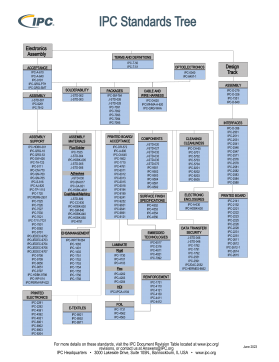
IPC标准体系树结构图 IPC Standards Tree 2023
分类:国外协会
时间:2026-04-01
标签:结构
格式:PDF
价格:免费
-

Sierra Circuits公司 PCB堆叠设计指南 PCB Stack-Up Design Guide June 2024
分类:国外协会
时间:2026-07-21
标签:PCB
格式:PDF
价格:20 星币
-
IPC-HERMES-9852-2024 Version 1.6 SMT组装中机器对机器通信的全球标准 The Global Standard for Machine-to-Machine Communication in SMT Assembly
分类:国外协会
时间:2026-08-11
标签:机器
格式:PDF
价格:30 星币
-
IPC 印制电路板组件检查表 2024版 IPC CHECKLIST for Printed Board Assemblies
分类:国外协会
时间:2026-08-11
标签:印制电路板
格式:PDF
价格:20 星币
-
IPC 印制板组件标准指南 2026年 IPC Standards Guidance for Printed Board Assemblies
分类:国外协会
时间:2026-08-11
标签:标准指南
格式:PDF
价格:20 星币


