
ASTM D7194-19 (2024) 聚三氟氯乙烯(PCTFE)航空航天零件标准规范

VIP免费

Designation: D7194 −19 (Reapproved 2024)
Standard Specification for
Aerospace Parts Machined from Polychlorotrifluoroethylene
(PCTFE)
1
This standard is issued under the fixed designation D7194; the number immediately following the designation indicates the year of
original adoption or, in the case of revision, the year of last revision. A number in parentheses indicates the year of last reapproval. A
superscript epsilon (´) indicates an editorial change since the last revision or reapproval.
1. Scope
1.1 This specification is intended to be a means of calling
out finished machined parts ready for aerospace use. Such parts
may also find use in selected commercial applications where
there are clear benefits derived from the use of parts with high
molecular weight, good molecular weight retention during
processing, dimensional stability, controlled crystallinity, and
tightly controlled engineering tolerances.
1.2 This specification establishes requirements for parts
machined from virgin, unplasticized, 100 % polychlorotrifluo-
roethylene (PCTFE) homopolymers.
1.3 This specification does not cover parts machined from
PCTFE copolymers, PCTFE film or tape less than 0.25-mm
(0.010-in.) thick, or modified PCTFE (containing pigments or
plasticizers).
1.4 This specification does not allow parts containing re-
cycled material.
1.5 The specification does not cover PCTFE parts intended
for general use applications, in which control of dimensional
stability, molecular weight, and crystallinity are not as impor-
tant. For machined PCTFE parts intended for general use, use
Specification D7211.
1.6 This specification classifies parts into three classes
based upon intended uses and exposures: oxygen-containing
media, reactive media, and inert media.
1.7 Application—PCTFE components covered by this speci-
fication are virgin, 100 % PCTFE resin, free of plasticizers and
other additives. The components are combustion resistant in
oxygen, dimensionally stable, and meet other specific physical
characteristics appropriate for their end use. They are used in
valves, regulators, and other devices in oxygen, air, helium,
nitrogen, hydrogen, ammonia, and other aerospace media
systems. The components typically are used as valve seats,
o-rings, seals, and gaskets. They are removed and replaced
during normal maintenance procedures. The components pro-
vide reliable sealing surfaces resulting in proper closure of
valves and related devices and no leakage from the system into
the environment. They will experience static mechanical
loading, cyclic mechanical loading, temperatures ranging from
cryogenic to 71°C (160°F), and pressures up to 68.9 MPa
(10,000, psig) for oxygen and air media, and 103.4 MPa
(15,000 psig) for inert media.
1.8 The values stated in SI units are to be regarded as
standard. The values in parentheses are for information only.
1.9 The following precautionary caveat pertains only to the
test methods portion, Section 13, of this specification: This
standard does not purport to address all of the safety concerns,
if any, associated with its use. It is the responsibility of the user
of this standard to establish appropriate safety, health, and
environmental practices and determine the applicability of
regulatory limitations prior to use.
NOTE 1—There is no known ISO equivalent to this standard.
1.10 This international standard was developed in accor-
dance with internationally recognized principles on standard-
ization established in the Decision on Principles for the
Development of International Standards, Guides and Recom-
mendations issued by the World Trade Organization Technical
Barriers to Trade (TBT) Committee.
2. Referenced Documents
2.1 ASTM Standards:
2
D618 Practice for Conditioning Plastics for Testing
D638 Test Method for Tensile Properties of Plastics
D792 Test Methods for Density and Specific Gravity (Rela-
tive Density) of Plastics by Displacement
D883 Terminology Relating to Plastics
D1204 Test Method for Linear Dimensional Changes of
Nonrigid Thermoplastic Sheeting or Film at Elevated
Temperature
D1430 Classification System for Polychlorotrifluoroethylene
(PCTFE) Plastics
1
This specification is under the jurisdiction of ASTM Committee D20 on
Plastics and is the direct responsibility of Subcommittee D20.15 on Thermoplastic
Materials.
Current edition approved April 1, 2024. Published April 2024. Originally
approved in 2005. Last previous edition approved in 2019 as D7194 - 19. DOI:
10.1520/D7194-19R24.
2
For referenced ASTM standards, visit the ASTM website, www.astm.org, or
contact ASTM Customer Service at service@astm.org. For Annual Book of ASTM
Standards volume information, refer to the standard’s Document Summary page on
the ASTM website.
Copyright © ASTM International, 100 Barr Harbor Drive, PO Box C700, West Conshohocken, PA 19428-2959. United States
This international standard was developed in accordance with internationally recognized principles on standardization established in the Decision on Principles for the
Development of International Standards, Guides and Recommendations issued by the World Trade Organization Technical Barriers to Trade (TBT) Committee.

D1600 Terminology for Abbreviated Terms Relating to Plas-
tics (Withdrawn 2024)
3
D1708 Test Method for Tensile Properties of Plastics by Use
of Microtensile Specimens
D2512 Test Method for Compatibility of Materials with
Liquid Oxygen (Impact Sensitivity Threshold and Pass-
Fail Techniques) (Withdrawn 2023)
3
D3045 Practice for Heat Aging of Plastics Without Load
D4591 Test Method for Determining Temperatures and
Heats of Transitions of Fluoropolymers by Differential
Scanning Calorimetry
D7211 Specification for Parts Machined from Polychlorotri-
fluoroethylene (PCTFE) and Intended for General Use
G86 Test Method for Determining Ignition Sensitivity of
Materials to Mechanical Impact in Ambient Liquid Oxy-
gen and Pressurized Liquid and Gaseous Oxygen Envi-
ronments
2.2 Federal Standards
4
NASA-STD-6001B Flammability, Offgassing, and Compat-
ibility Requirements and Test Procedures—Mechanical
Impact for Materials in Ambient Pressure LOX (Test 13A)
and Mechanical Impact for Materials in Variable Pressure
GOX and LOX (Test 13B)
3. Terminology
3.1 Definitions:
3.1.1 Terms are defined in accordance with Terminologies
D883 and D1600 unless otherwise indicated.
3.1.2 air media, n—liquid air, pressurized air, and breathing
air.
3.1.3 cognizant engineering organization, n—the company,
agency, or other authority responsible for the system or
component in which aerospace grade PCTFE is used. This, in
addition to design personnel, may include personnel from
material and process engineering, or quality groups and others
as appropriate.
3.1.4 inert media, n—gaseous helium (GHe) and gaseous
nitrogen (GN
2
) up to 103.4 MPa (15,000 psig).
3.1.5 oxygen media, n—liquid oxygen (LOX) and gaseous
oxygen (GOX) up to 68.9 MPa (10,000 psig).
3.1.6 processing route, n—the method whereby a thermo-
plastic is taken above its melting point and processed into a
semifinished article, typically sheet or rod stock. For PCTFE,
the common processing methods are extrusion and compres-
sion molding.
3.1.7 reactive media, n—ammonia (NH
3
) up to 3.5 MPa
(500 psig), gaseous hydrogen (GH
2
) up to 46.2 MPa (6700
psig), and liquid hydrogen (LH
2
) up to 2.8 MPa (400 psig).
4. Significance and Use
4.1 Given the thermal instability of PCTFE in the melt, the
primary intention of this specification is to ensure adequate
molecular weight retention during molding, whereby as-
polymerized resin, typically powder or coarse granular
material, is thermoformed into semi-finished rod or sheet stock,
typically by extrusion or compression molding.
4.2 Given the relatively low glass transition temperature of
PCTFE (T
g
≈55°C (130°F)), the second intention of this
specification is to ensure good dimensional stability of finished
articles subjected to temperature excursions during service that
approach or exceed the T
g
.
4.3 Because the crystallinity can vary widely in PCTFE,
which in turn can affect the performance of a finished PCTFE
part in its intended application, nonmandatory guidance is
given in Appendix X1. This guidance cites recommended
ASTM Test Methods that measure the specific gravity
(X1.1.4), melting point (X1.1.5), and tensile properties
(X1.1.6) of PCTFE. Control of these properties is used to
established consistency between different lots of finished parts
where either the starting resin, molding method, thickness of
the semifinished article, or machining method change.
4.4 Finished parts are categorized based on whether anneal-
ing of the finished parts is not performed (Method A), or is
performed (Methods B and C), depending on the dimensional
stability of a statistical sample of unannealed finished parts.
5. Classification
5.1 Part shape and size shall be defined by the applicable
purchase order.
5.2 The type of product shall be categorized by the intended
use category:
5.2.1 Type I for use in air and oxygen media (see 3.1.2 and
3.1.5) at service pressures above 11.4 MPa (1650 psi) that
require batch testing.
5.2.2 Type II for use in (1) air and oxygen media (at service
pressures below 11.4 MPa (1650 psi), or at service pressures
above 11.4 MPa (1650 psi) that do not require batch testing);
or (2) inert and reactive media up to the pressures specified in
3.1.4 and 3.1.7.
5.2.3 Type III for use in media other than air, oxygen, GHe,
GN
2
, ammonia, GH
2
and LH
2
, at service pressures specified by
the cognizant engineering organization.
6. Ordering Information
6.1 All parts covered by this specification shall be ordered
by Specification D7194, Type, as listed in Section 5, or as listed
on the purchase contract or order when Type is not specified
explicitly.
7. Apparatus
7.1 Oven—A convection oven capable of maintaining a
temperature of 100 to 200 62°C.
8. Materials and Manufacture
8.1 Parts shall be made from as-polymerized resin meeting
all requirements of Classification System D1430. Type I,II and
III parts shall be fabricated from as-polymerized resin classi-
fied as meeting Classification System D1430, Group 01, Class
1, Grade 3.
3
The last approved version of this historical standard is referenced on
www.astm.org.
4
Available from U.S. Government Printing Office, Superintendent of
Documents, 732 N. Capitol St., NW, Washington, DC 20401-0001, http://
www.access.gpo.gov.
D7194 − 19 (2024)
2

8.2 Parts shall be made from virgin, unplasticized, 100 %
polychlorotrifluoroethylene (PCTFE) homopolymer.
8.3 No recycled polymer or regrind shall be permitted.
8.4 The base material shall be free of all defects or con-
taminants that would be detrimental to final fabrication or
performance of the finished parts.
9. Property Requirements
9.1 Numerical values listed in this specification for proper-
ties or property changes are minimum values.
9.2 All requirements stipulated in Sections 9and 10 shall be
met, unless otherwise specified in the purchase contract or
order. Any exceptions to the requirements stipulated in Sec-
tions 9and 10 shall be noted in 14.2.1.12.
9.3 Any nonmandatory tests or data, such as those cited or
alluded to in the nonmandatory Appendix X1, shall be speci-
fied at the time of the order.
10. General Requirements
NOTE 2—Unless otherwise specified in the purchase contract or order,
the molder producing the semifinished article from which finished parts
are made is responsible for insuring the requirements in 10.4 are met. All
other requirements listed in Section 10 pertain to the finished part, and
therefore, are the responsibility of the supplier of the finished, machined
part.
10.1 Finished parts shall have a natural translucent appear-
ance. The color shall be white or gray with no yellowing or
other unnatural color.
10.2 Finished parts shall be free of voids, scratches, fissures,
inclusions, or entrapped air bubbles that will affect serviceabil-
ity. No particles (for example, black specks) shall be visible to
the naked eye.
10.3 Finished parts shall be made from semifinished articles
having a zero strength time (ZST
stock
) of 300 to 450 s (Grade 3)
when determined in accordance with 13.1.
10.4 The maximum allowable ZST drop, ∆ZST, shall be
<20 % as determined in 13.1.4.
10.5 No critical engineering dimension in a finished part
shall change by more than 0.01 mm/mm (0.01 in./in.) when
measured at 23 62°C (73.4 63.6°F) after being held for a
predetermined time at 100 62°C (212 63.6°F) as determined
in accordance with 13.2.
10.6 Finished parts meeting the general requirements of
10.1 to 10.5 shall be categorized as parts suitable for Method A
(no annealing required).
10.7 Finished parts meeting the general requirements of
10.1 to 10.4, but which fail general requirement 10.5 (∆L>1.0
%), shall be categorized as Method B parts (annealing required
to achieve best dimension stability) or Method C parts (anneal-
ing required to achieve best engineering tolerances). Annealing
for Methods B and C parts shall be performed in accordance
with 13.3.
10.8 For nonmandatory requirements; namely, specific
gravity variation, melting point range, and minimum tensile
strength, that can be imposed to help ensure lot-to-lot
consistency, especially in regards to controlling the crystallin-
ity of PCTFE semi-finished articles and parts machined there-
from subject to this specification, refer to Nonmandatory
Appendix X1.
11. Specific Requirements
11.1 Specific requirements for Type I,II and III material are
summarized in Table 1.
11.2 Type I—Each batch or lot of parts, or semifinished
articles from which the finished parts are made, shall meet the
test and criteria of 13.4 or 13.5 in accordance with NASA-
STD-6001B and Test Methods D2512 and G86 according to
the discretion of the procuring agency. Finished parts meeting
the criteria of 13.4 or 13.5 shall be assigned a unique dash
number or part number.
11.3 Types II and III—No requirements exist either for
mechanical impact testing and assigning of a unique dash
number or part number.
12. Test Specimens and Number of Tests
12.1 In cases where measured values depend on orientation,
for example, tensile properties and dimensions of test speci-
mens made from extruded material, the extrusion direction
relative to the measurement direction shall be tracked.
12.2 When the number of test specimens is not stated in the
test method, a single determination may be made. If more than
a single determination or determinations on separate portions
TABLE 1 Type I, II and III Material Requirements
A
Type
Service
Pressure
(MPa (psi)) and
affected parts
Media
Mechanical
Impact Test
Required
Assign Unique
Part Number or
Dash Number
for the
Finished Part
I>11.4 (1650):
only parts
for which
mechanical
impact
testing is
required
oxygen, air yes yes
II oxygen, air:
< 11.4 (1650):
all parts
> 11.4 (1650):
only parts
for which no
mechanical
impact
testing is
required
He:
inert, reactive:
pressures
specified
in 3.1.4 and
3.1.7:
all parts
oxygen, air,
inert, reactive
no no
III all pressures
B
and parts
other
(for example,
nitrox)
no no
A
Finished parts made from Type I,II and III material will be in an annealed
condition, have a ZST
stock
from 300 to 450 s, and have a ZST drop no greater than
20 %.
B
As specified by the cognizant engineering organization.
D7194 − 19 (2024)
3

摘要:
展开>>
收起<<
ASTM D7194-19 2024 Standard Specification for Aerospace Parts Machined from Polychlorotrifluoroethylene(PCTFE) 聚三氟氯乙烯(PCTFE)航空航天零件标准规范
声明:本文档系会员上传,若文档所含内容侵犯了您的版权或隐私,请立即通知,我们立即给予侵权申诉删除!
相关推荐
-
IPC 9592B-2012 计算机和电信行业电源转换设备的要求VIP专免

 2024-09-01 420
 -
IPC A-600K-2020 印制板的可接受性VIP专享
 2024-09-01 273
 -
IPC HDBK-001H-2021(电子装配核心标准J-STD-001)的补充手册和指南VIP专享
 2024-09-01 324
 -
IPC HDBK-830A-2013 conformal涂层的设计、选择与应用指南VIP专免
 2024-09-01 545
 -
IPC A-610H-2020 Acceptability of Electronic Assemblies 电子组件的可接受性标准VIP专享
 2024-09-01 367
 -
IPC AJ-820A-2012 装配与连接手册VIP专免
 2024-09-01 268
 -
IPC WHMA A-620E-2022 电缆与线束组件的要求与验收规范VIP专享
 2024-09-01 148
 -
IPC TM-650-2000 (2007) 试验方法手册 高清英文版VIP专免
 2025-01-04 704
 -
IPC-1751A-2010 声明流程管理的通用要求VIP免费
 2025-02-07 267
 -
IPC Standards Handbook 2025 多个标准精华浓缩(非IPC官方出版)VIP专享
 2025-12-15 166
作者:Carl
分类:国外协会
价格:10星币
属性:7 页
大小:363.23KB
格式:PDF
时间:2024-09-03
相关内容
-
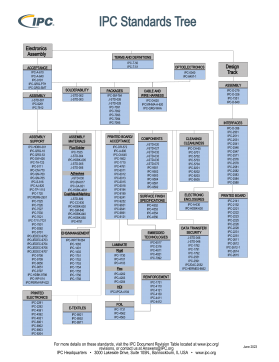
IPC标准体系树结构图 IPC Standards Tree 2023
分类:国外协会
时间:2026-04-01
标签:结构
格式:PDF
价格:免费
-

Sierra Circuits公司 PCB堆叠设计指南 PCB Stack-Up Design Guide June 2024
分类:国外协会
时间:2026-07-21
标签:PCB
格式:PDF
价格:20 星币
-
IPC-HERMES-9852-2024 Version 1.6 SMT组装中机器对机器通信的全球标准 The Global Standard for Machine-to-Machine Communication in SMT Assembly
分类:国外协会
时间:2026-08-11
标签:机器
格式:PDF
价格:30 星币
-
IPC 印制电路板组件检查表 2024版 IPC CHECKLIST for Printed Board Assemblies
分类:国外协会
时间:2026-08-11
标签:印制电路板
格式:PDF
价格:20 星币
-
IPC 印制板组件标准指南 2026年 IPC Standards Guidance for Printed Board Assemblies
分类:国外协会
时间:2026-08-11
标签:标准指南
格式:PDF
价格:20 星币


